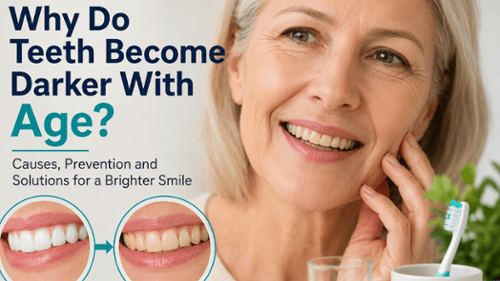
A bright, white smile can naturally change as we get older. If your teeth look more yellow, dull, or darker than they did when you were younger, it does not necessarily mean that something is wrong. Teeth becoming darker with age is common and can happen because of changes inside the tooth as well as years of exposure to foods, drinks, and other staining factors.
Understanding why teeth change colour can help you determine whether you simply need better stain control, a professional dental cleaning, or a cosmetic treatment such as professional teeth whitening.
Why Do Teeth Get Darker as You Age?
One of the main reasons teeth become darker with age is the natural change in the tooth's structure.
Your teeth have an outer layer called enamel. Enamel is hard, naturally light-coloured, and protects the inner parts of the tooth. Beneath the enamel is dentin, which is naturally more yellow in colour.
As you age, enamel can become thinner and more translucent. This allows more of the yellowish dentin underneath to show through, which can make the teeth appear darker or more yellow. The American Dental Association identifies aging as a common cause of intrinsic tooth discoloration.
This means that sometimes darker-looking teeth are not simply covered in stains. The natural colour of the tooth itself can become more noticeable over time.
1. Enamel Becomes Thinner Over Time
Enamel does not grow back once it is lost. Years of normal chewing, brushing, acidic foods and drinks, and other forms of wear can gradually affect the enamel.
As enamel becomes thinner, the dentin underneath becomes more visible.
Because dentin has a naturally yellowish colour, your smile may gradually appear less bright even if you maintain good oral hygiene.
This is one reason why an older person's natural tooth colour can look different from the bright white appearance commonly associated with younger teeth.
2. Years of Coffee, Tea and Other Foods Can Leave Stains
Age also means more years of exposure to foods and beverages that can stain teeth.
Common sources of tooth staining include:
- Coffee
- Tea
- Red wine
- Cola and other dark beverages
- Berries and other highly pigmented foods
- Certain sauces and spices
- Tobacco products
These substances contain pigments that can accumulate on the surface of the teeth. The American Dental Association classifies these as extrinsic stains, meaning the discoloration develops on or near the outside of the tooth.
Even if you have only one cup of coffee each day, the effect can become more noticeable after years of regular consumption.
3. Tobacco Can Cause Persistent Tooth Discoloration
Smoking and other tobacco use can contribute significantly to tooth discoloration.
Tobacco-related stains can become difficult to remove with ordinary brushing because they can build up over time.
If someone has used tobacco for many years, the resulting discoloration may be one reason their teeth appear considerably darker than they did earlier in life.
4. Previous Dental Treatment Can Affect Tooth Colour
Not every dark tooth is caused by normal aging.
A tooth can change colour following certain dental treatments, injuries, or changes within the tooth. For example, a tooth that has experienced trauma may gradually become darker.
Certain dental materials can also contribute to discoloration. The cause can be different when one tooth becomes noticeably darker than the surrounding teeth. In those situations, a dental examination can help determine what is causing the colour change.
5. Dry Mouth and Oral Health Can Influence Staining
Saliva plays an important role in maintaining the oral environment. When the mouth becomes dry, it can be more difficult to naturally clear food particles and other substances from the teeth.
Dry mouth can have several causes, including certain medications and other health-related factors. If you regularly experience a dry mouth along with changes in your teeth, discussing it with your dentist is worthwhile.
Good daily brushing, flossing and regular professional cleanings can help control plaque and surface buildup.
Is It Normal for Teeth to Become Yellow With Age?
Yes, some gradual yellowing or darkening can be a normal part of aging.
However, there is an important distinction between natural age-related colour changes and discoloration caused by a dental problem.
A gradual change affecting many teeth may be related to enamel thinning, dentin showing through, or accumulated surface staining.
A sudden change in the colour of one tooth, especially if it becomes grey, brown, or significantly darker than the surrounding teeth, deserves professional attention.
A dentist can examine the tooth and determine whether the colour change is cosmetic or related to an underlying dental issue.
Can You Prevent Teeth From Getting Darker With Age?
You cannot completely stop the natural aging process of your teeth, but you can reduce factors that contribute to discoloration.
Maintain Good Daily Oral Hygiene
Brush your teeth twice a day with fluoride toothpaste and clean between your teeth regularly. Consistent oral hygiene helps reduce plaque and surface buildup.
Limit Frequent Staining Foods and Drinks
You do not necessarily have to eliminate coffee, tea or other staining foods from your diet. Reducing frequent exposure and maintaining good oral hygiene can help limit surface staining.
Avoid Tobacco
Avoiding tobacco is beneficial for both oral health and the appearance of your teeth.
Keep Up With Professional Dental Cleanings
Professional cleanings can remove plaque and tartar that cannot always be removed effectively through regular brushing alone.
Regular dental visits also give your dentist an opportunity to identify changes in tooth colour or other oral health concerns early.
Be Careful With DIY Whitening Methods
Not every home whitening method is safe or effective.
Highly abrasive DIY scrubs can wear away enamel and potentially make teeth appear more yellow by exposing more of the underlying dentin.
For that reason, it is better to discuss whitening options with a dental professional before using aggressive or frequently repeated whitening treatments.
Can Professional Teeth Whitening Make Older Teeth Whiter?
In many cases, professional teeth whitening can improve the appearance of teeth affected by certain types of discoloration.
Whitening works differently depending on the cause and type of staining. Surface stains and some internal discoloration can respond to bleaching, while certain types of discoloration may require another cosmetic treatment.
At Orchards Dental in South Edmonton, professional whitening options include in-clinic whitening and customized take-home whitening trays. The clinic recommends an evaluation to determine whether whitening is appropriate for the individual patient.
Professional assessment is particularly useful when you are unsure whether your teeth are darker because of surface staining, natural aging, enamel changes, or another cause.
What If Whitening Does Not Work?
Whitening is not equally effective for every type of discoloration.
If the colour change is related to deeper intrinsic discoloration or a particular dental condition, your dentist may recommend another cosmetic option.
Depending on your teeth and overall oral health, treatments such as porcelain veneers or dental crowns may sometimes be considered to improve the appearance of severely discoloured teeth. Orchards Dental offers cosmetic dentistry options including veneers, crowns and professional teeth whitening.
The right treatment depends on why the tooth has changed colour, so an examination should come before choosing a cosmetic procedure.
Frequently Asked Questions About Darker Teeth With Age
Why do teeth become yellow as you get older?
Teeth can become yellow or darker with age because enamel gradually becomes thinner and more translucent, allowing the naturally yellowish dentin underneath to show through. Years of exposure to coffee, tea, tobacco and other staining substances can also contribute to discoloration.
Can older teeth be whitened?
Many types of age-related and surface discoloration can respond to professional teeth whitening. However, whitening results depend on the cause and type of discoloration.
Does brushing make yellow teeth white again?
Regular brushing helps remove plaque and some surface stains, but it cannot reverse the natural yellow colour of dentin showing through thinner enamel.
Why is only one of my teeth getting darker?
A single dark tooth can have different causes, including previous trauma, changes inside the tooth, dental materials, or other dental conditions. A dentist should evaluate a tooth that becomes noticeably darker than the others.
Does coffee make teeth darker?
Yes. Coffee contains pigments that can contribute to extrinsic tooth staining. The effect can become more noticeable with years of regular consumption.
Is it safe to whiten teeth frequently?
Overusing whitening products can contribute to tooth sensitivity and may damage enamel or gums. It is best to follow product instructions and discuss frequent whitening with your dentist.
When Should You See a Dentist About Dark Teeth?
A gradual change in tooth colour can be part of normal aging, but you should consider a dental examination if:
- One tooth suddenly becomes darker.
- A tooth turns grey, brown or black.
- The colour change occurs with tooth pain.
- You notice increased sensitivity.
- You have a damaged or previously injured tooth.
- Whitening products are not improving the discoloration.
- You are unsure what is causing the colour change.
A dental professional can determine whether the issue is primarily cosmetic or whether the tooth needs further treatment.
Keep Your Smile Looking Its Best as You Age
Darker or more yellow teeth do not necessarily mean that your teeth are unhealthy. Natural changes to enamel and dentin, combined with years of exposure to staining foods, drinks and lifestyle factors, can gradually change the appearance of your smile.
Good oral hygiene, regular dental examinations, professional cleanings and appropriate cosmetic treatments can all help maintain a healthy-looking smile.
If you are concerned about yellow or discoloured teeth in Edmonton, Orchards Dental can assess the cause of the discoloration and discuss suitable options, including professional teeth whitening and other cosmetic treatments. The clinic is located in South Edmonton and offers both in-office whitening and customized take-home whitening options.